
Manwol · The Full Moon - Grand White Porcelain Moon Jar
REPUBLIC OF KOREA-CERTIFIED MASTERY — Created by an officially designated Grand Master of Korea, presented with verified provenance, maker identity, and signed authenticity documentation.
Manwol (滿月) · The Full Moon
A Grand White Porcelain Moon Jar
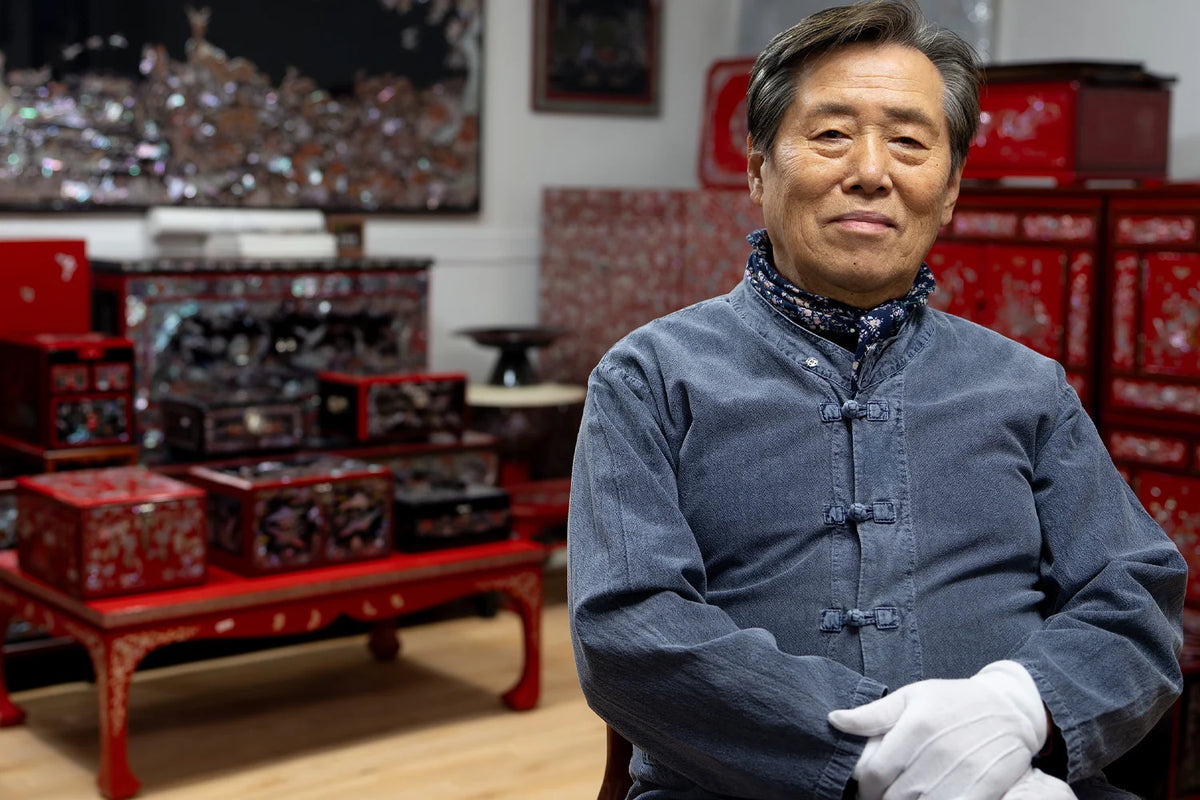
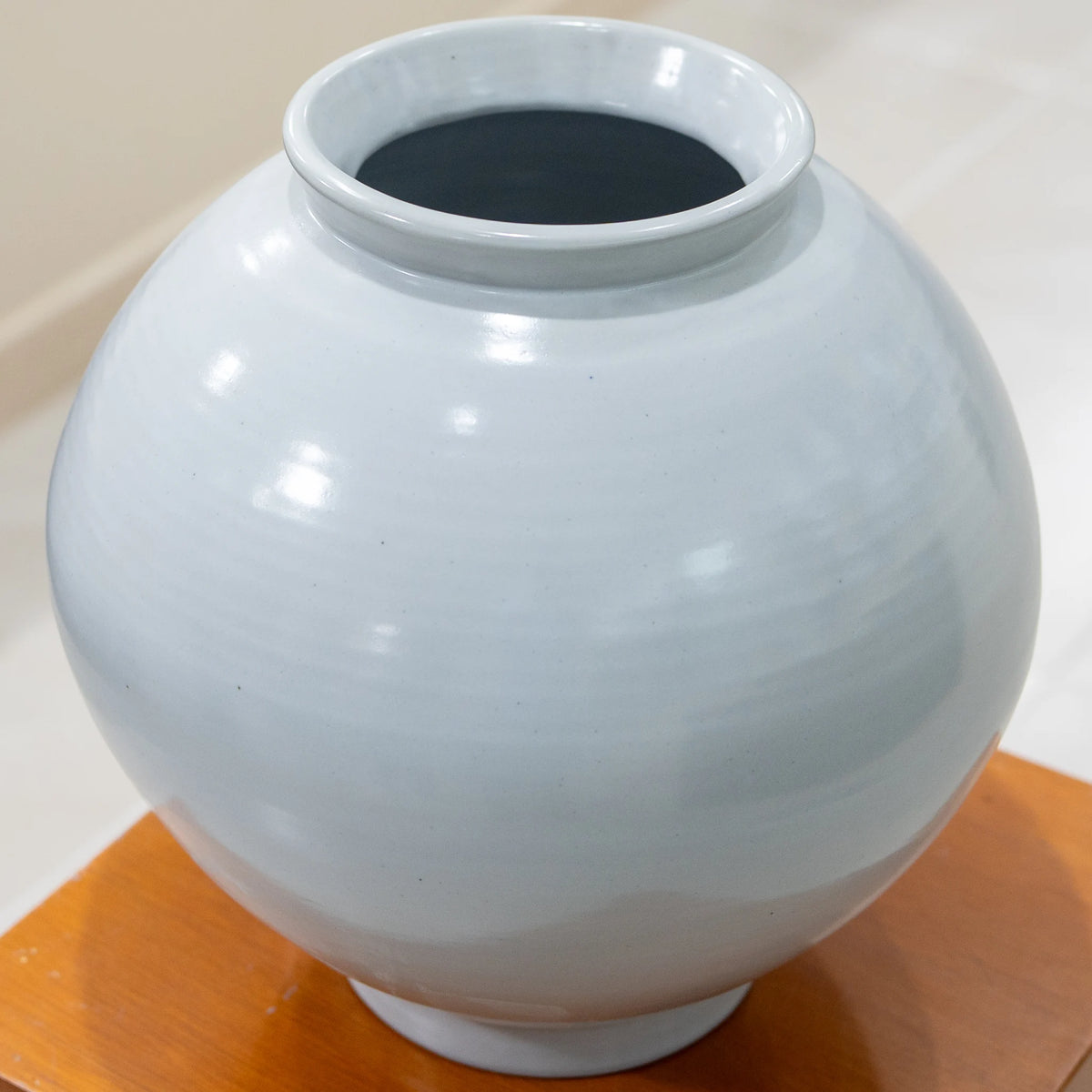
A grand moon jar of pure white porcelain, formed and fired in a pine-burning kiln by SEO KWANG SOO, Holder of Gyeonggi-do Intangible Cultural Heritage No. 41, Grand Master of Korea No. 367, and Korea’s foremost master of the moon jar. The fullness of the moon is its only ornament.
The Grand Master
SEO KWANG SOO (徐光洙), known by his art name Hando (韓陶), is revered as Korea’s foremost master of the moon jar. He was designated Grand Master of Korea No. 367 in ceramics in 2003, and in 2005 Holder of Gyeonggi-do Intangible Cultural Heritage No. 41 as Sagijang (沙器匠), master of traditional porcelain. Faithful to a tradition a thousand years old, he fires every work in a traditional wood-burning kiln.
The Work
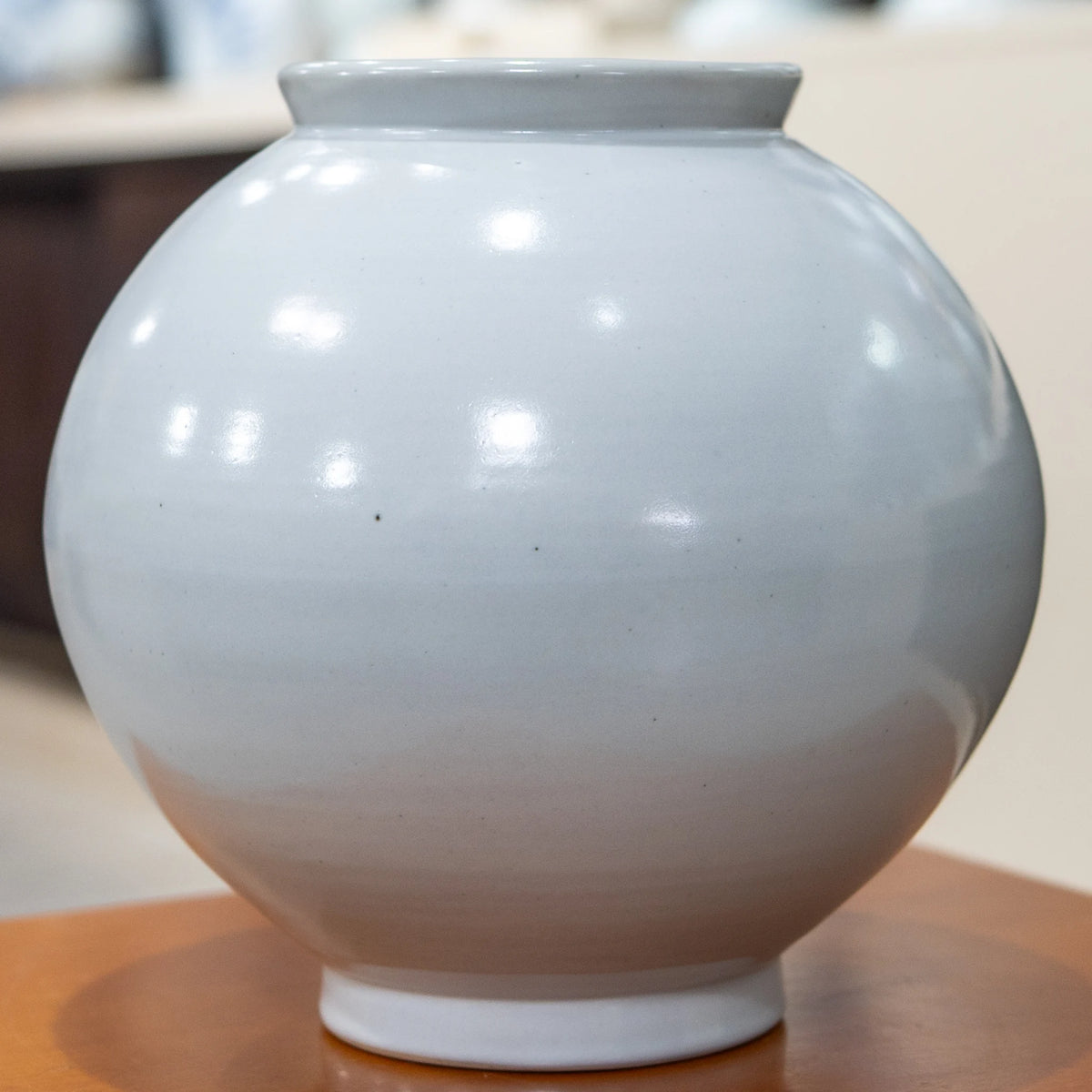
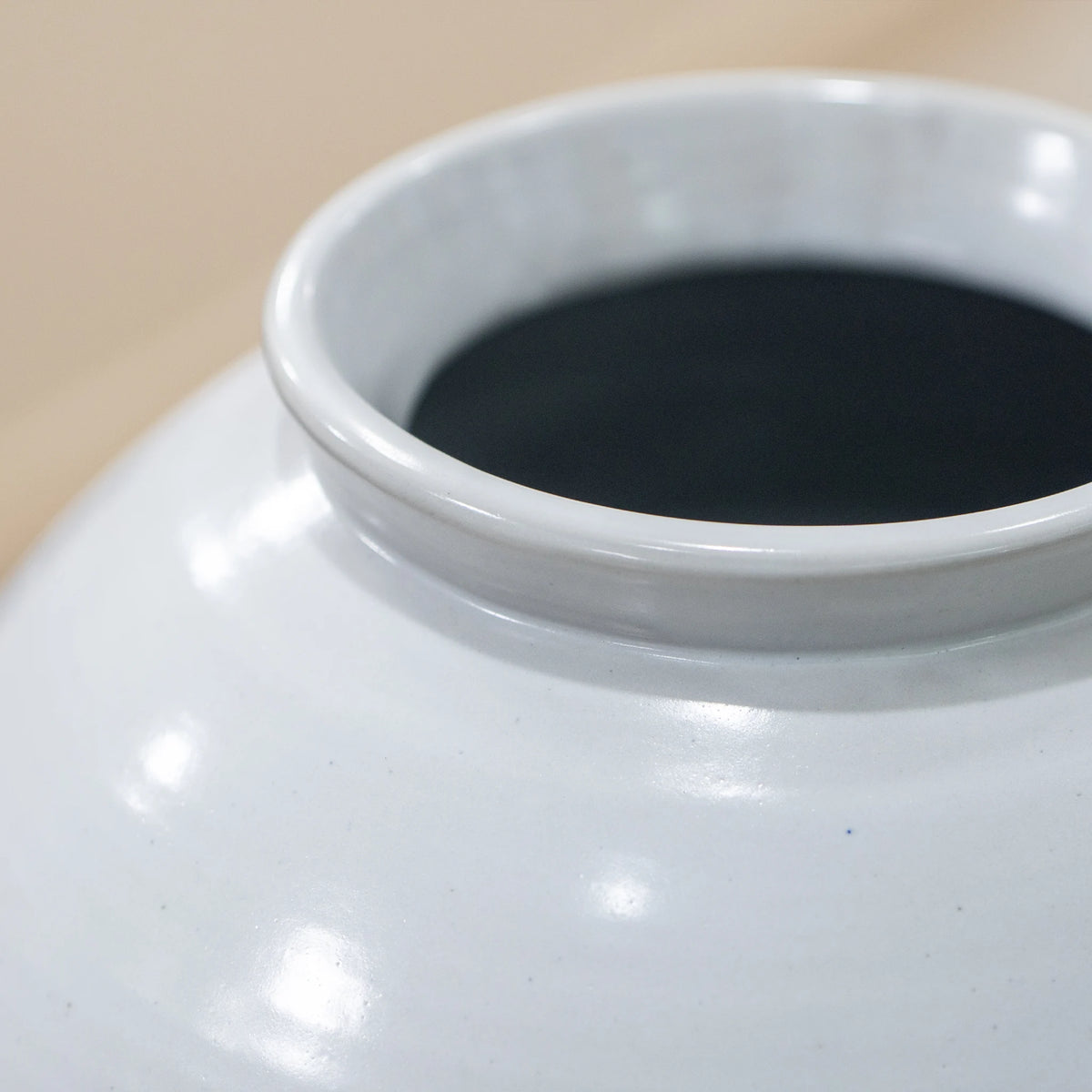
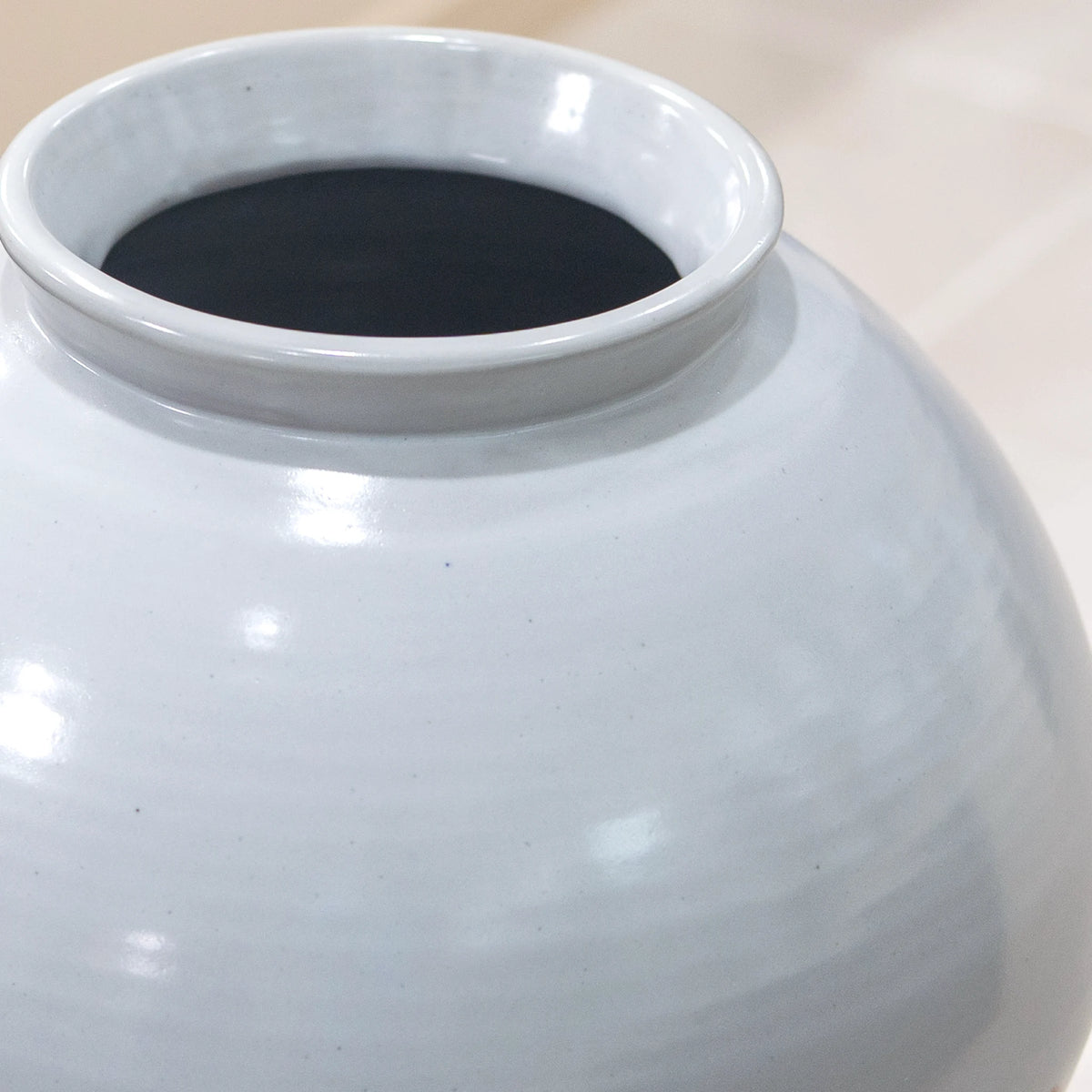
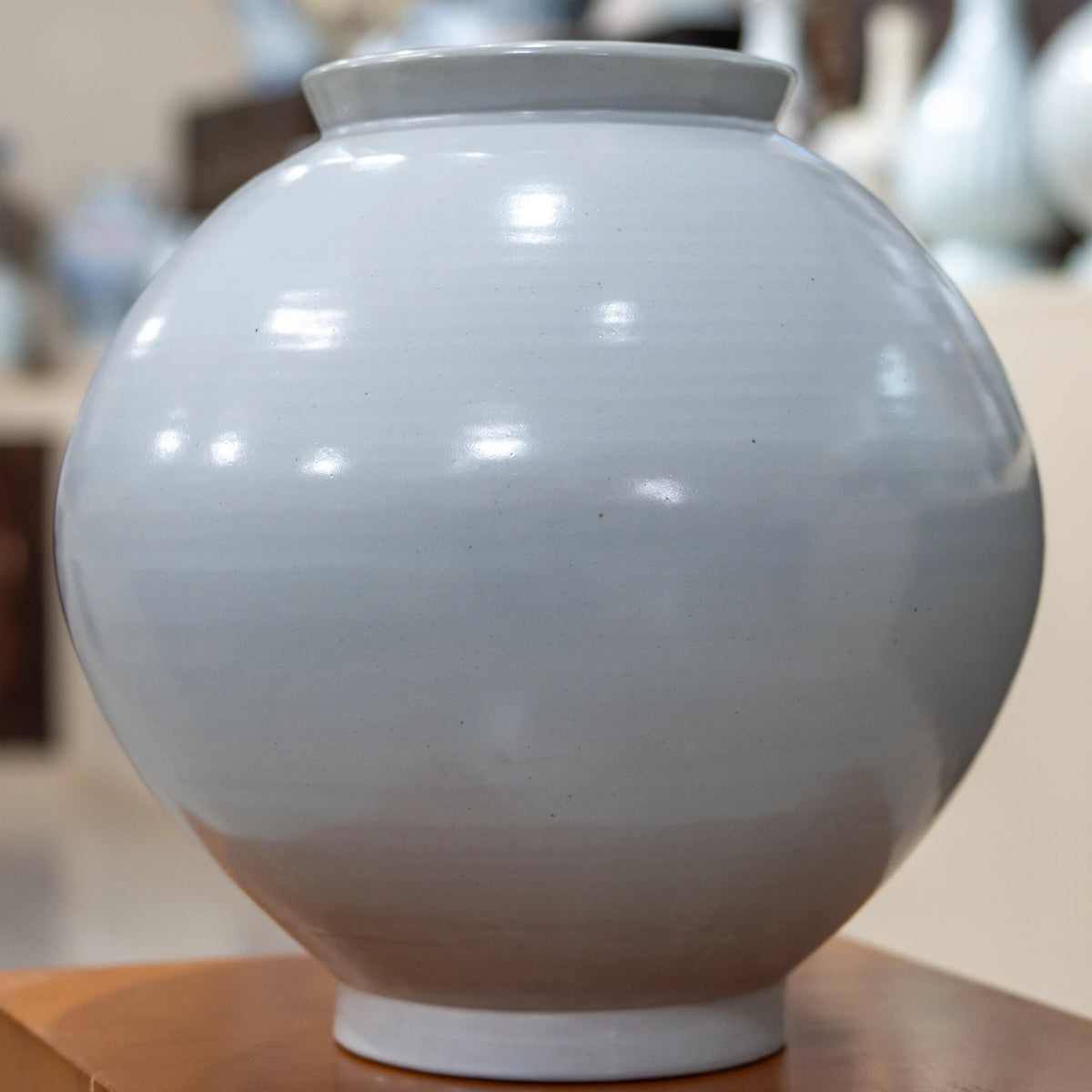
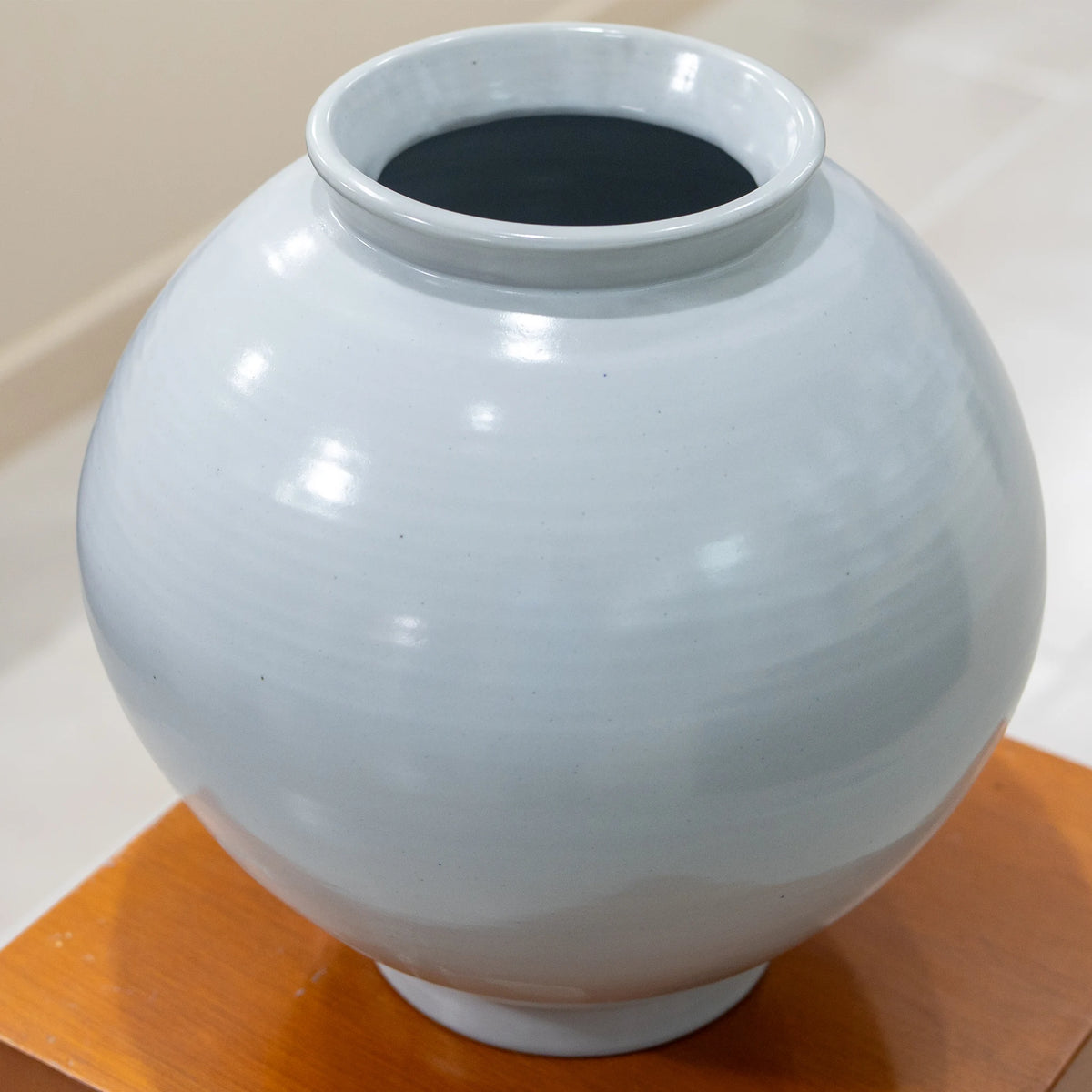
A jar of pure white porcelain, sixty-one centimeters in height and sixty-one in breadth. True to the thousand-year Korean method, two great hemispheres were thrown on the wheel and joined at the waist. Nothing is painted upon it: form, glaze, and fire alone carry the work.
Proven on the World Stage
Historic Joseon moon jars have sold for US$4.56 million at Christie’s New York (2023) and US$3.57 million at Sotheby’s New York (2023). The moon jar stands today as the very emblem of Korean art.
No Two Alike
No two works in the world are alike. The form and the touch of the flame differ with every piece: each Manwol is a singular work.
Natural Clay, Natural Glaze
This jar is thrown from natural clay and clothed in natural glaze, then given to the fire of a traditional kiln fed with Gangwon-do pine. Earth, glaze, wood, and flame made it.
To Endure a Thousand Years
The color of clay and glaze that have passed through fire does not fade. Goryeo celadon of the twelfth century, today a National Treasure of Korea, has kept its color for more than eight hundred years, and the white porcelain of Joseon has crossed the centuries beside it. These works came through the Korean War and stand in museums today. This jar was fired as they were, in a traditional wood-burning kiln.
At a Glance
- Dimensions: Diameter 61 × H 61 cm (approx. 24.0 × 24.0 in)
- Materials: white porcelain clay (baekto), clear glaze
- Making: two hemispheres thrown on the wheel and joined at the waist
- Firing: a traditional wood-burning kiln, with Gangwon-do pine
- Completed: August 2026
- Edition: three works, each one of a kind
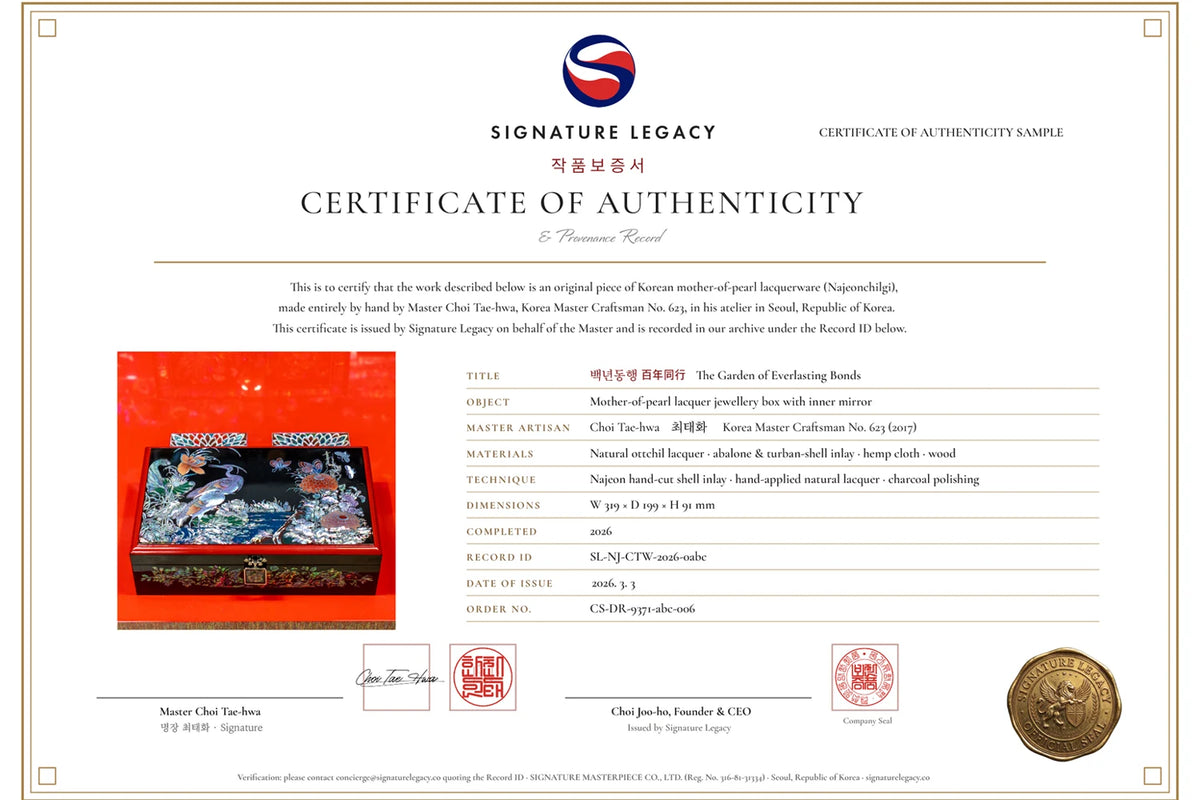
- Signature Record: a Certificate of Authenticity signed by the Grand Master and a Provenance Record, with a unique Record ID
- Delivery and care: insured and fully tracked international delivery in a custom wooden crate, and a Care & Conservation Guide
Reference
Style SL-S6161082
The Full Moon, Unadorned
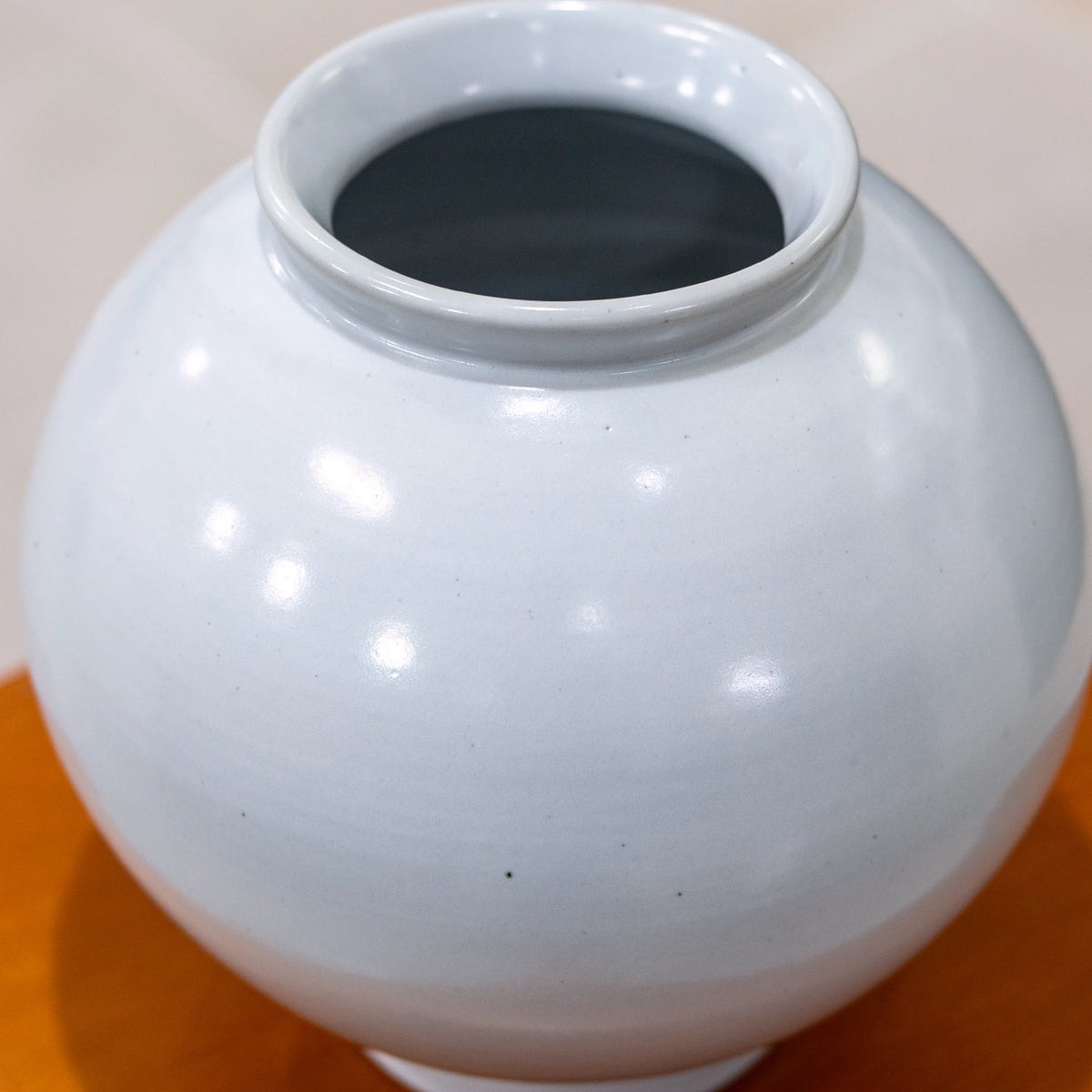
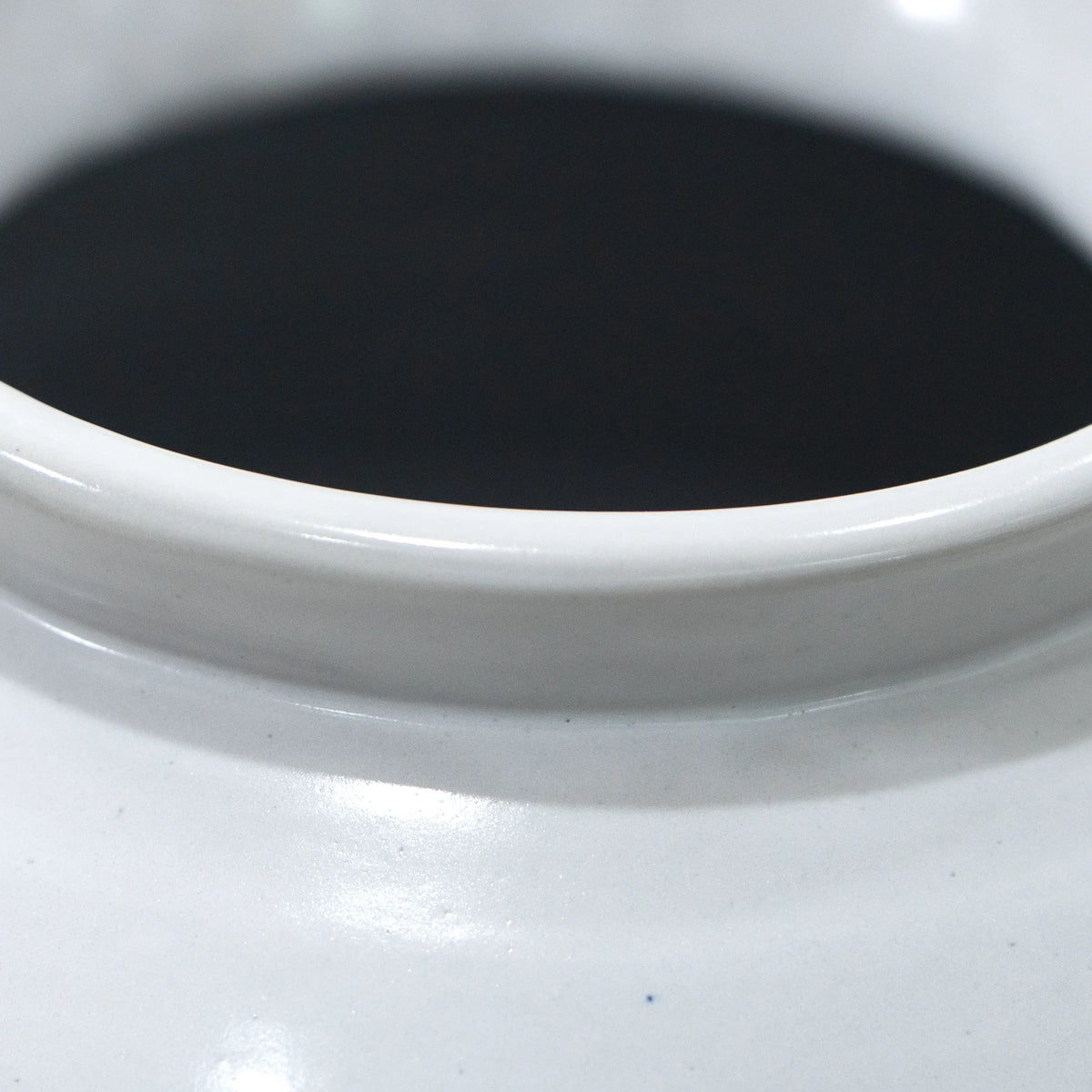
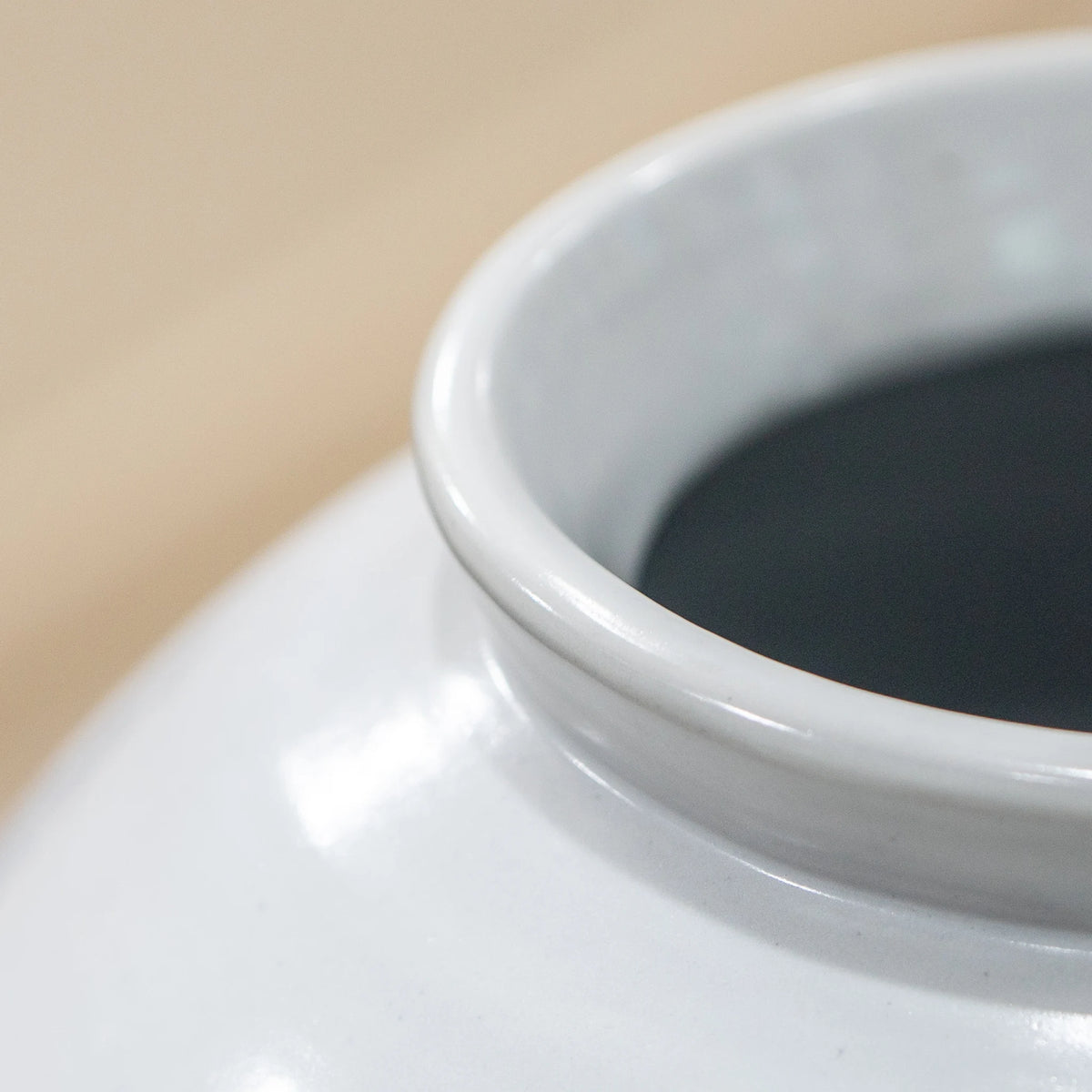
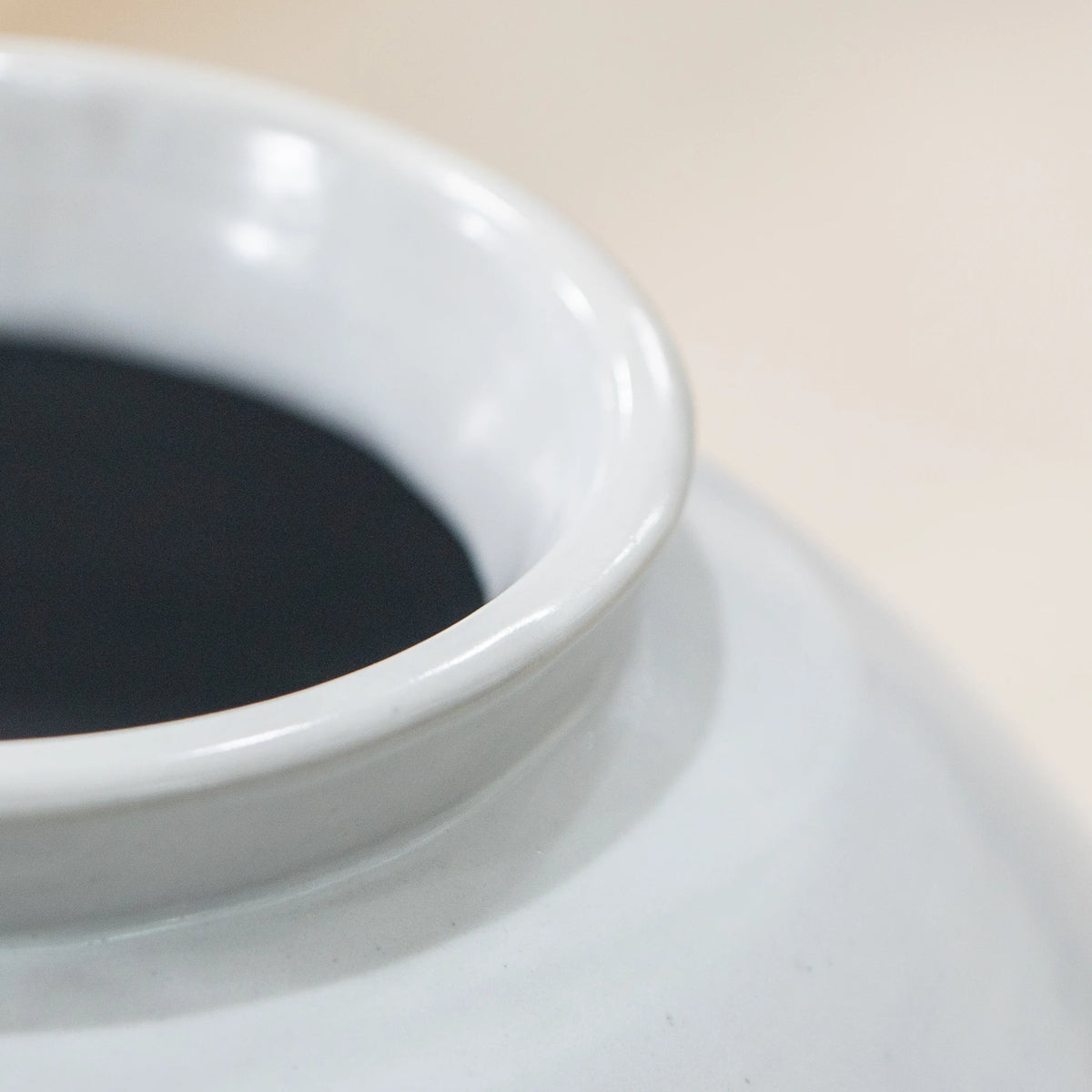
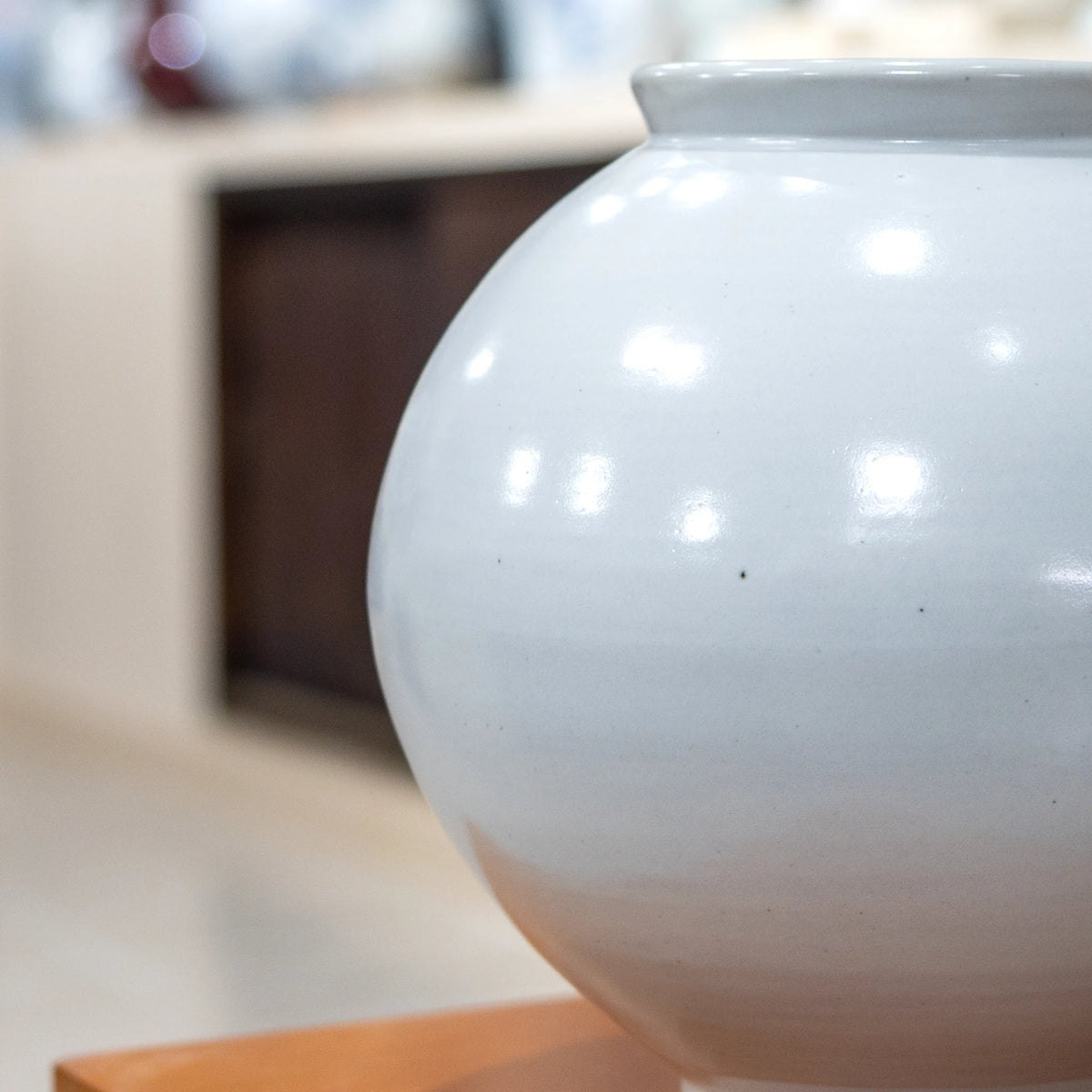
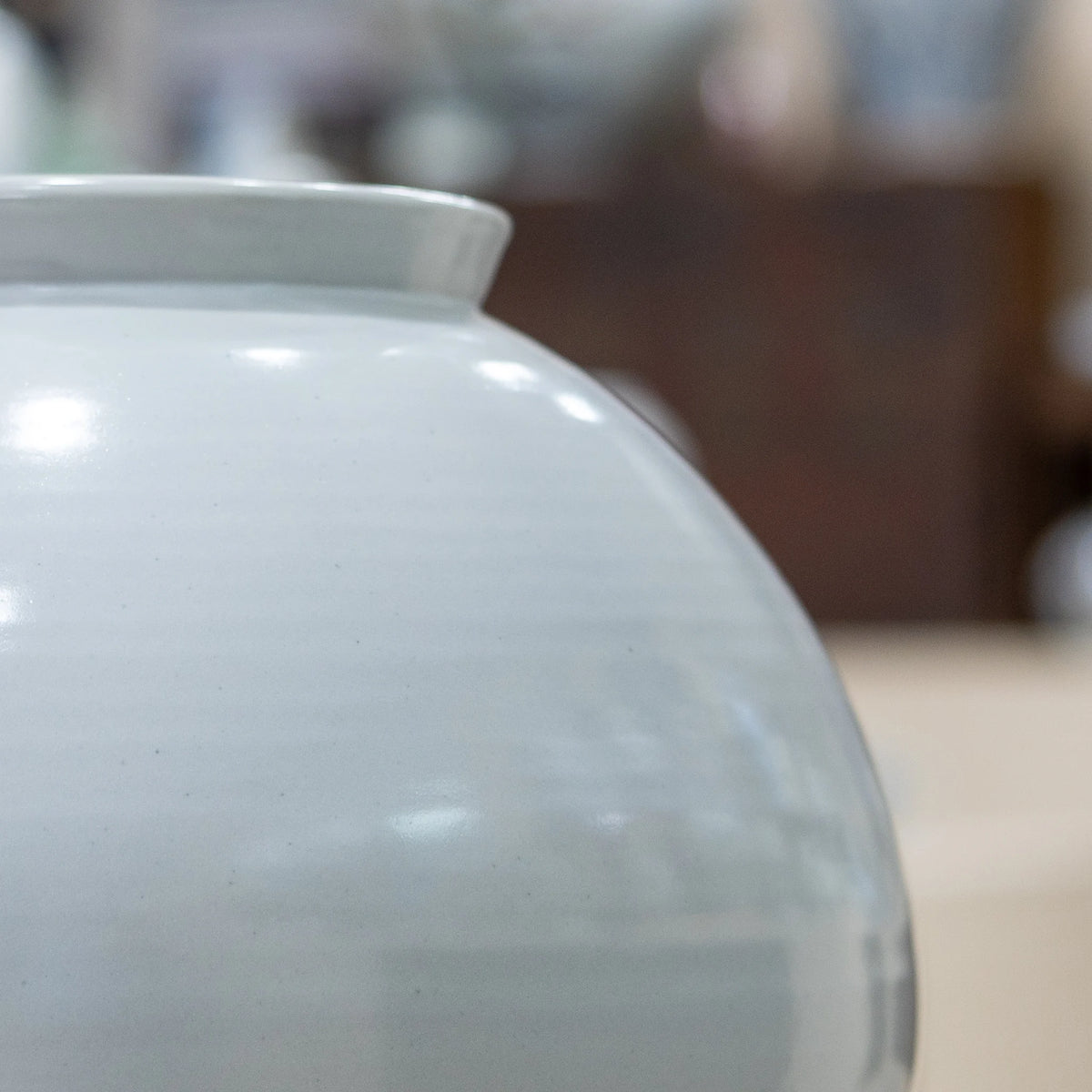
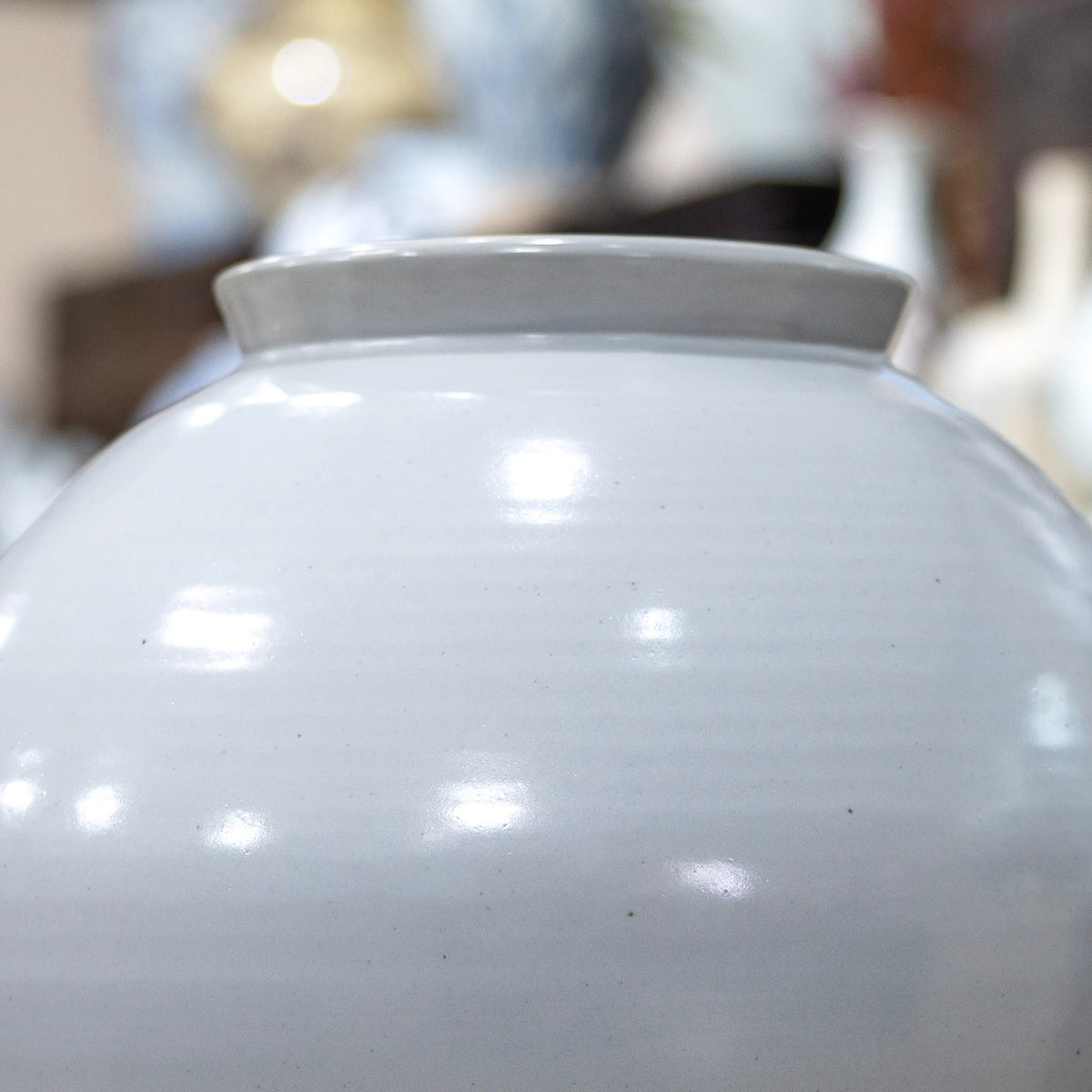
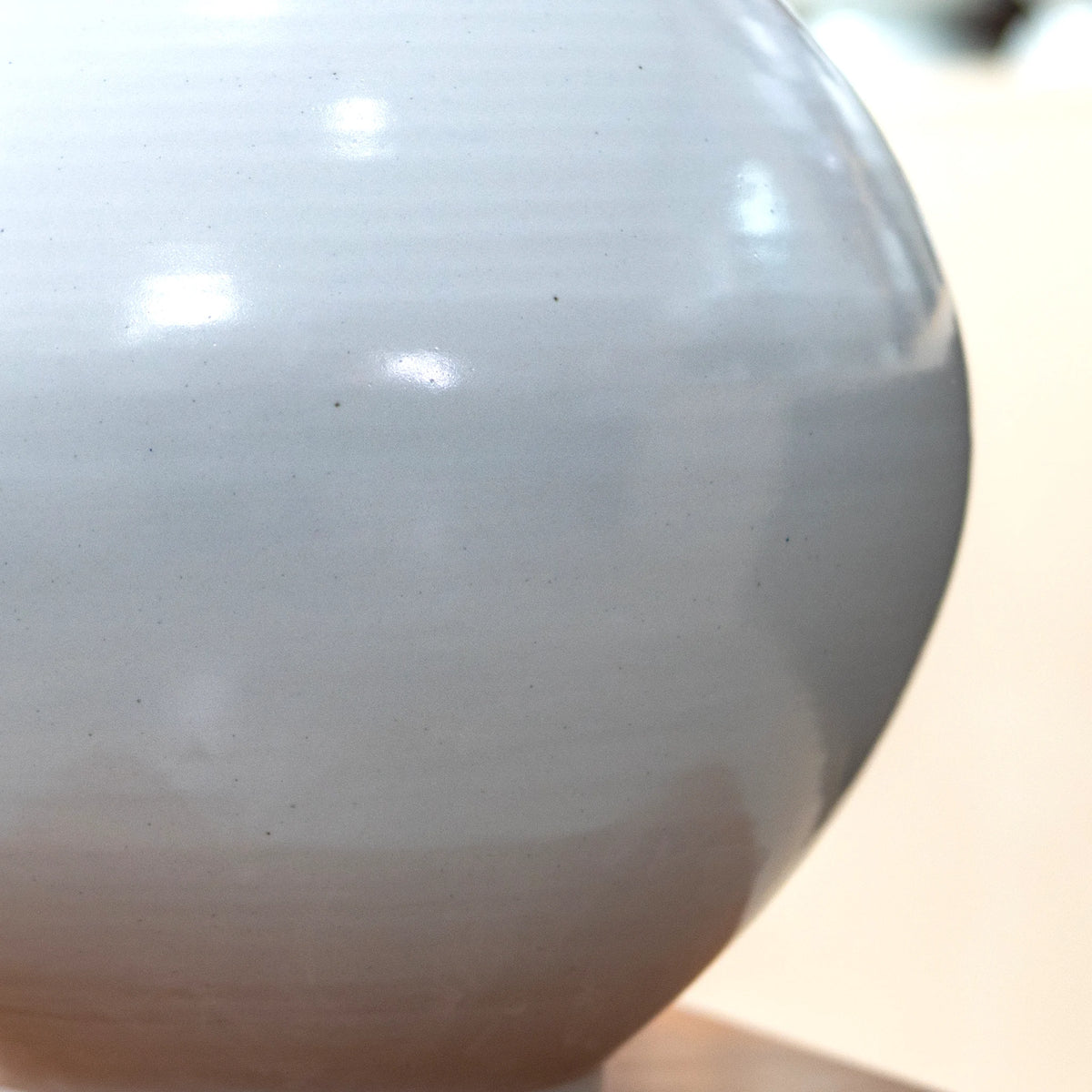
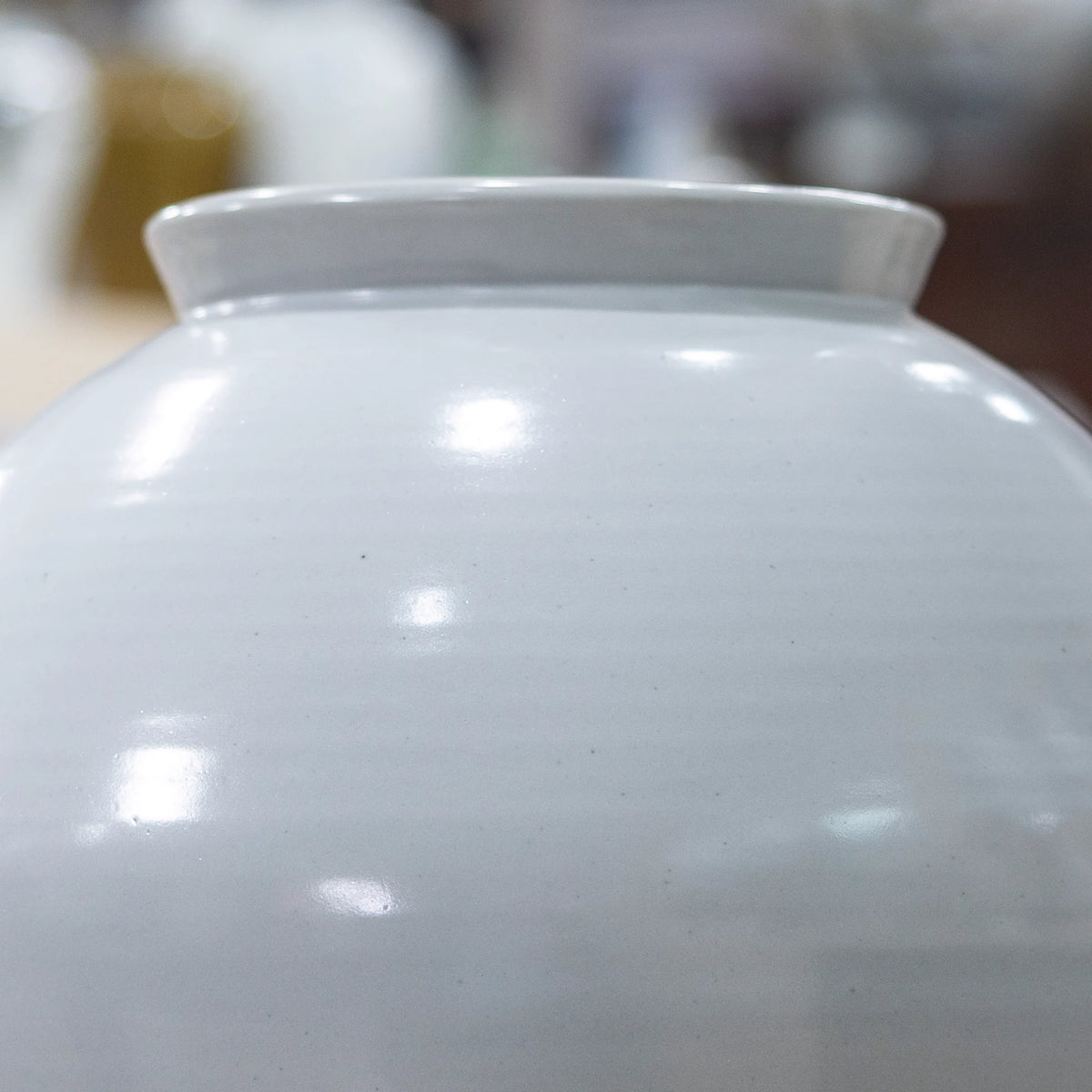
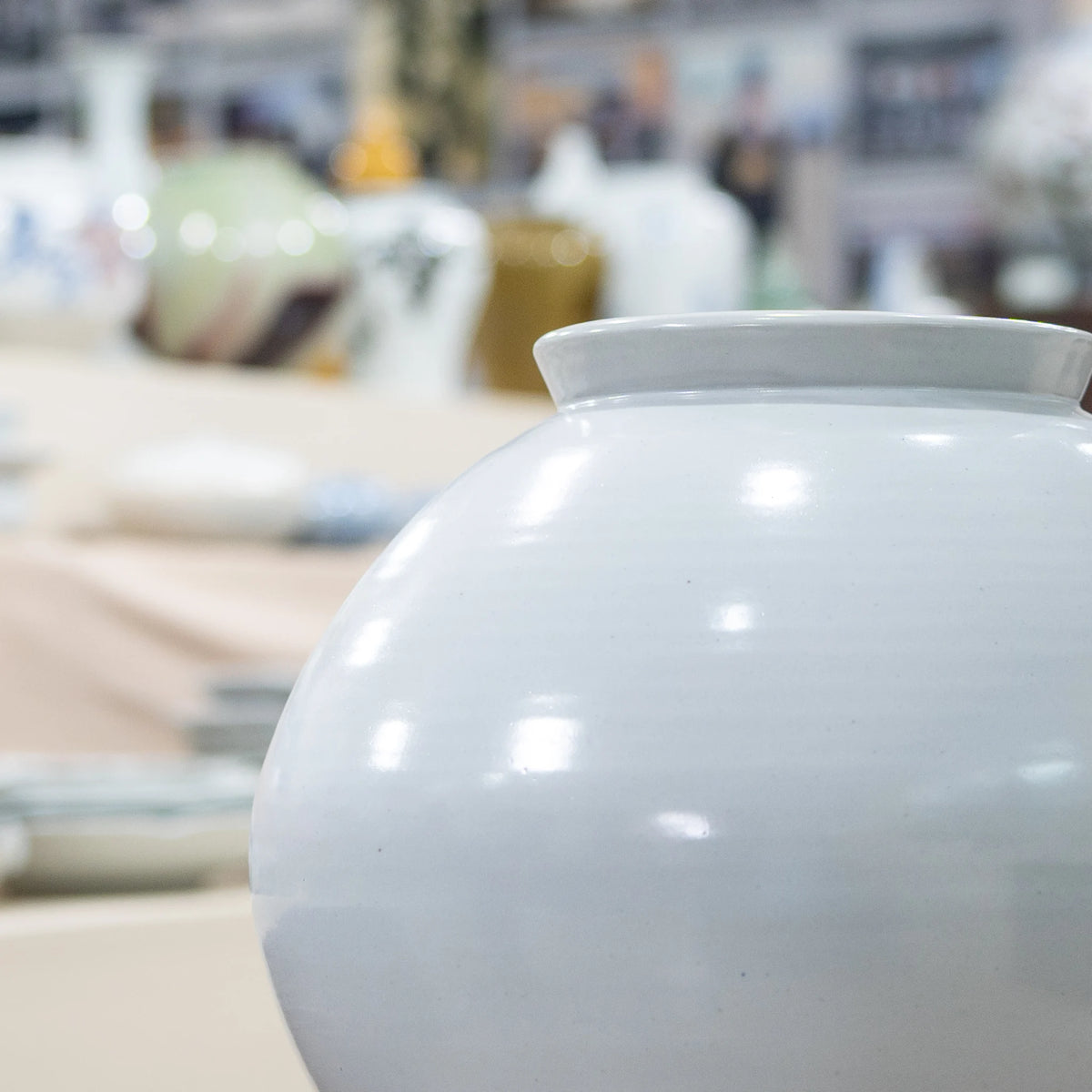
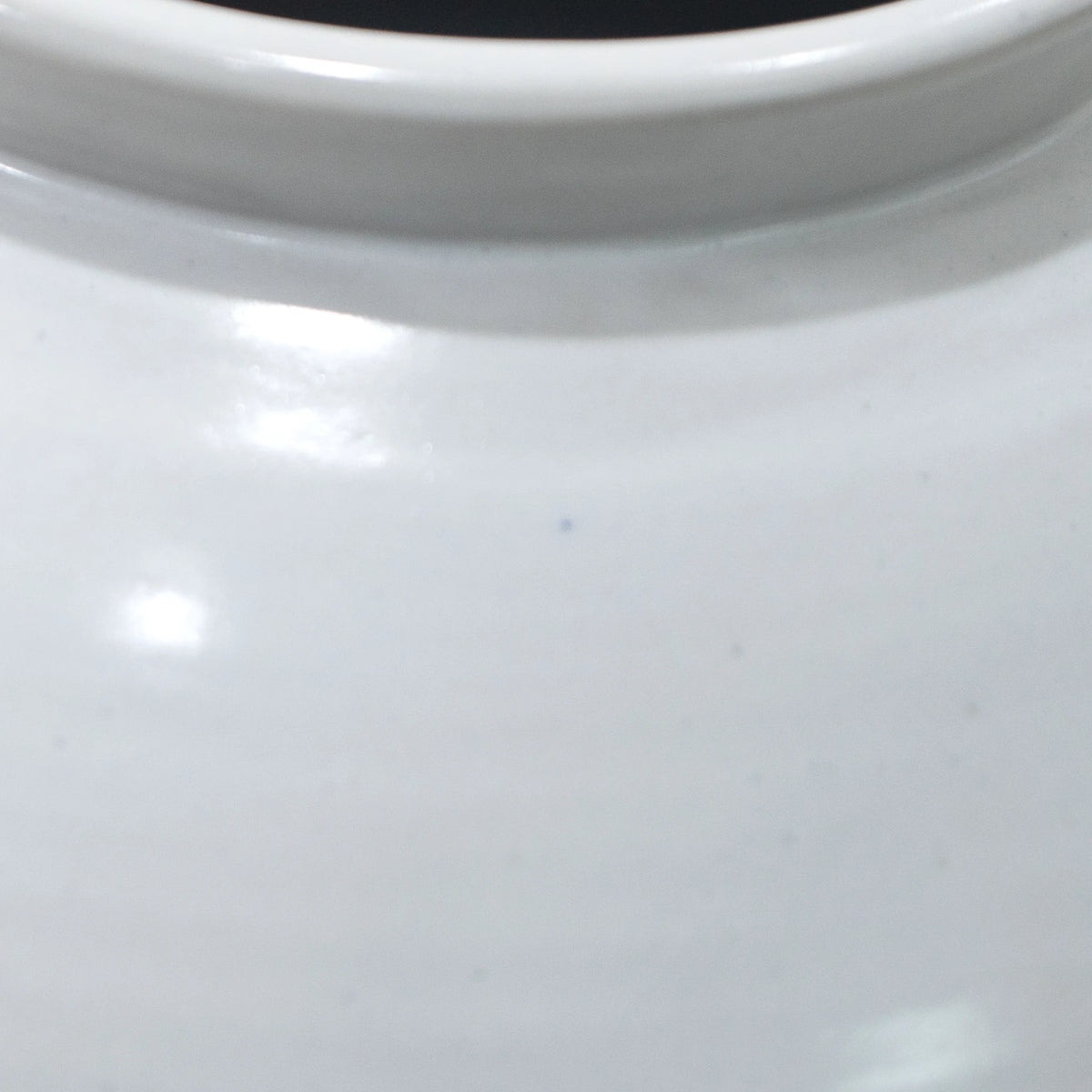
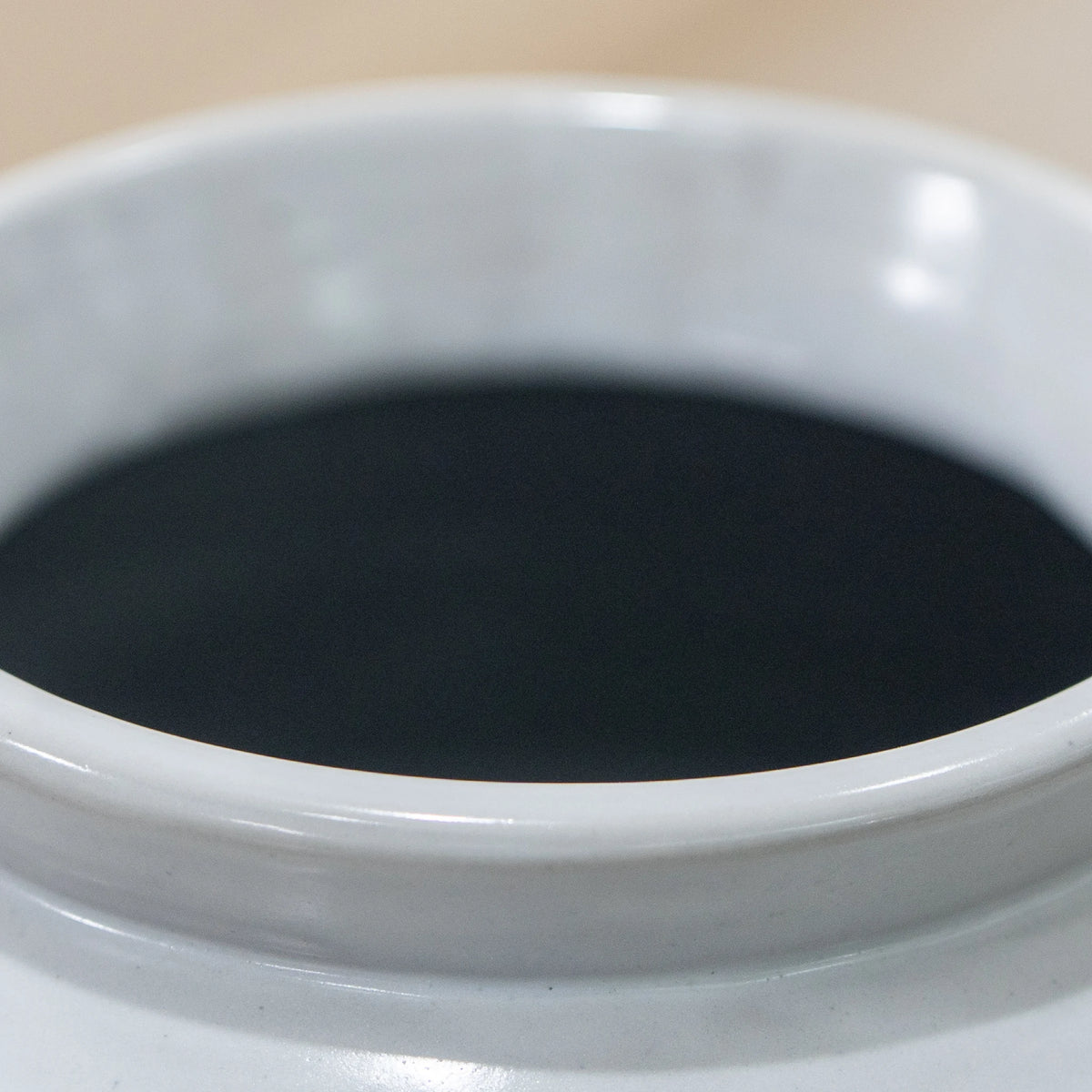
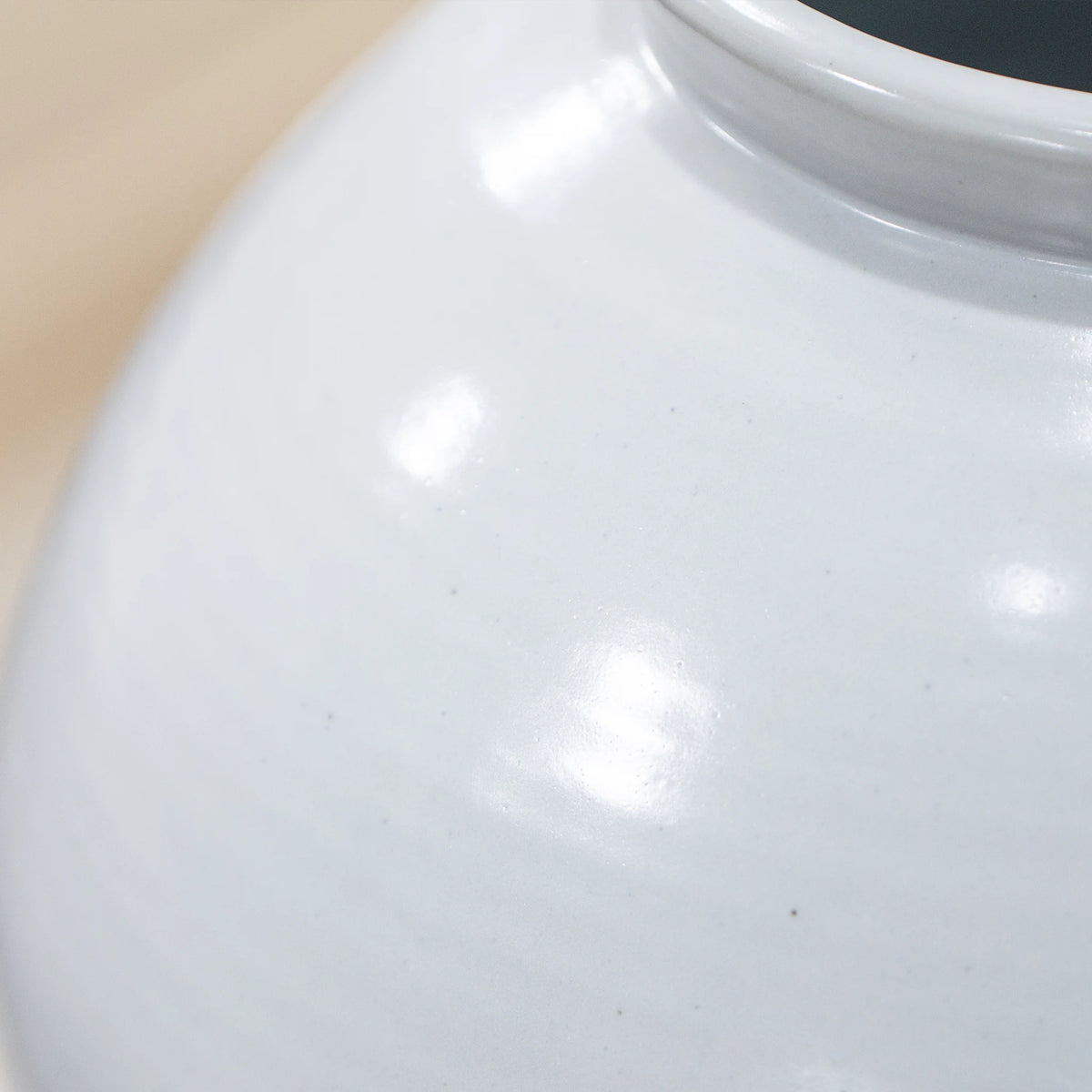
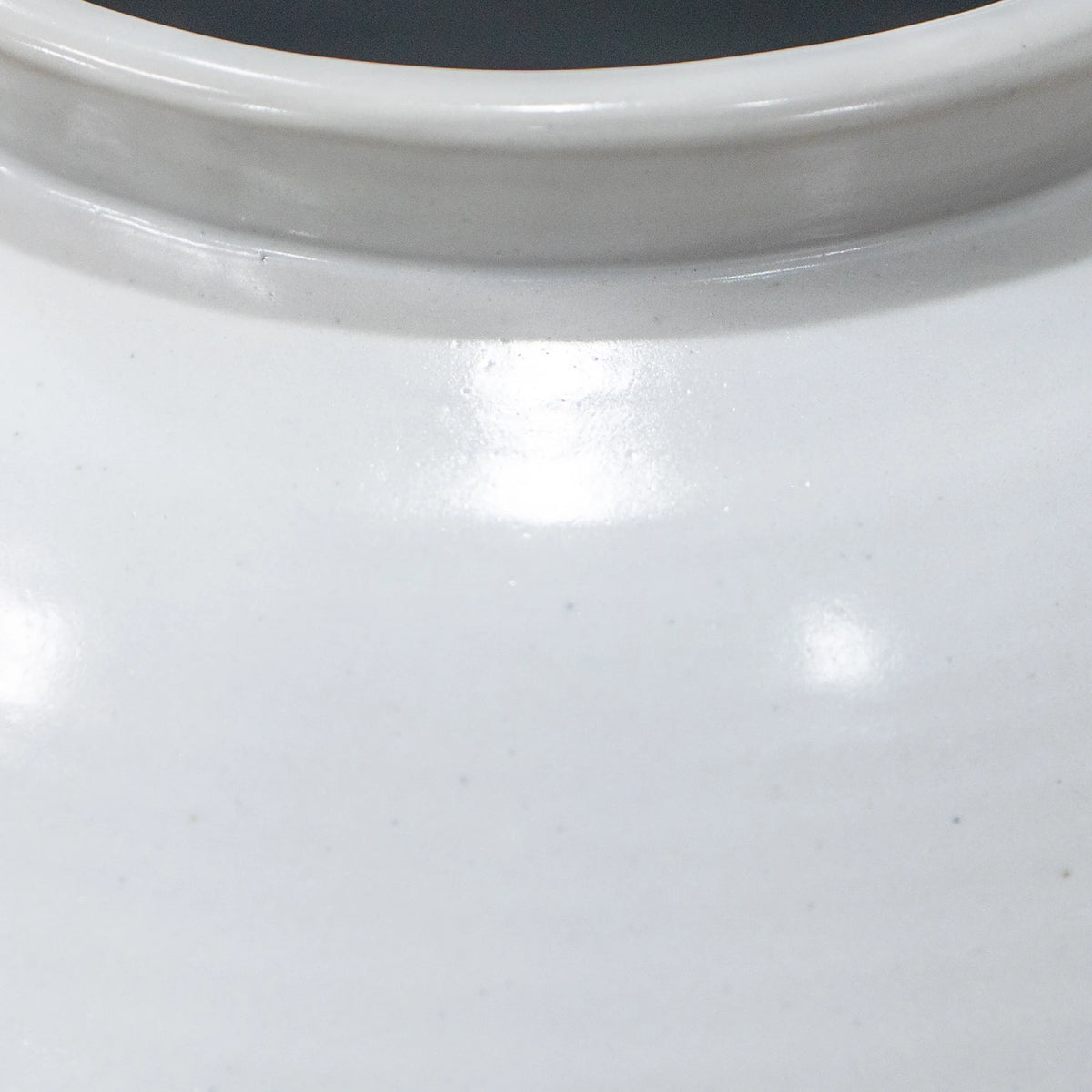
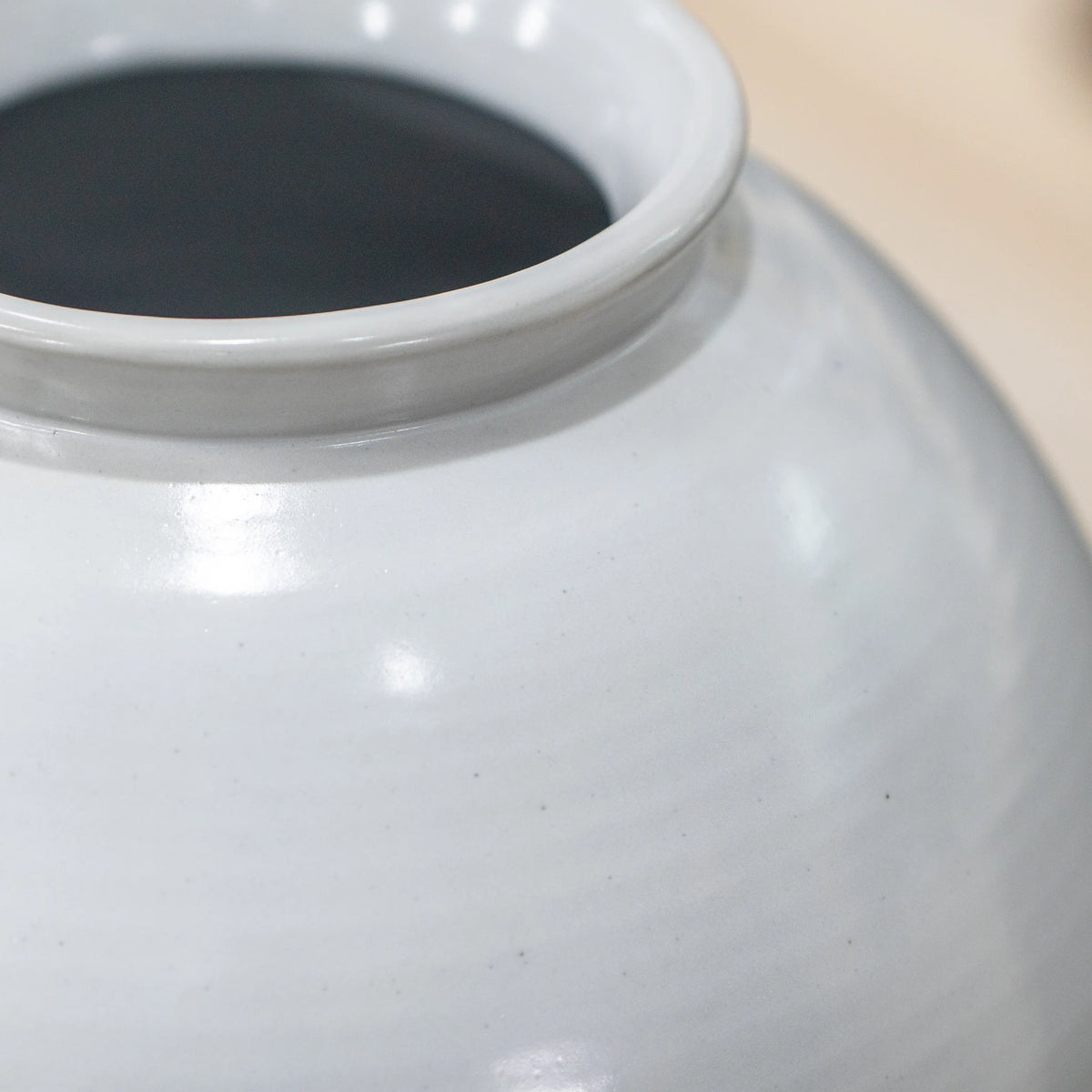
Manwol, “the full moon,” is a form as wide as it is tall, and of a scale that very few potters will attempt. There is no painting, no carving, no inscription. Its white is the soft, milk-white of Joseon porcelain, touched with the faintest breath of blue, deepening and lightening as daylight moves across the room.
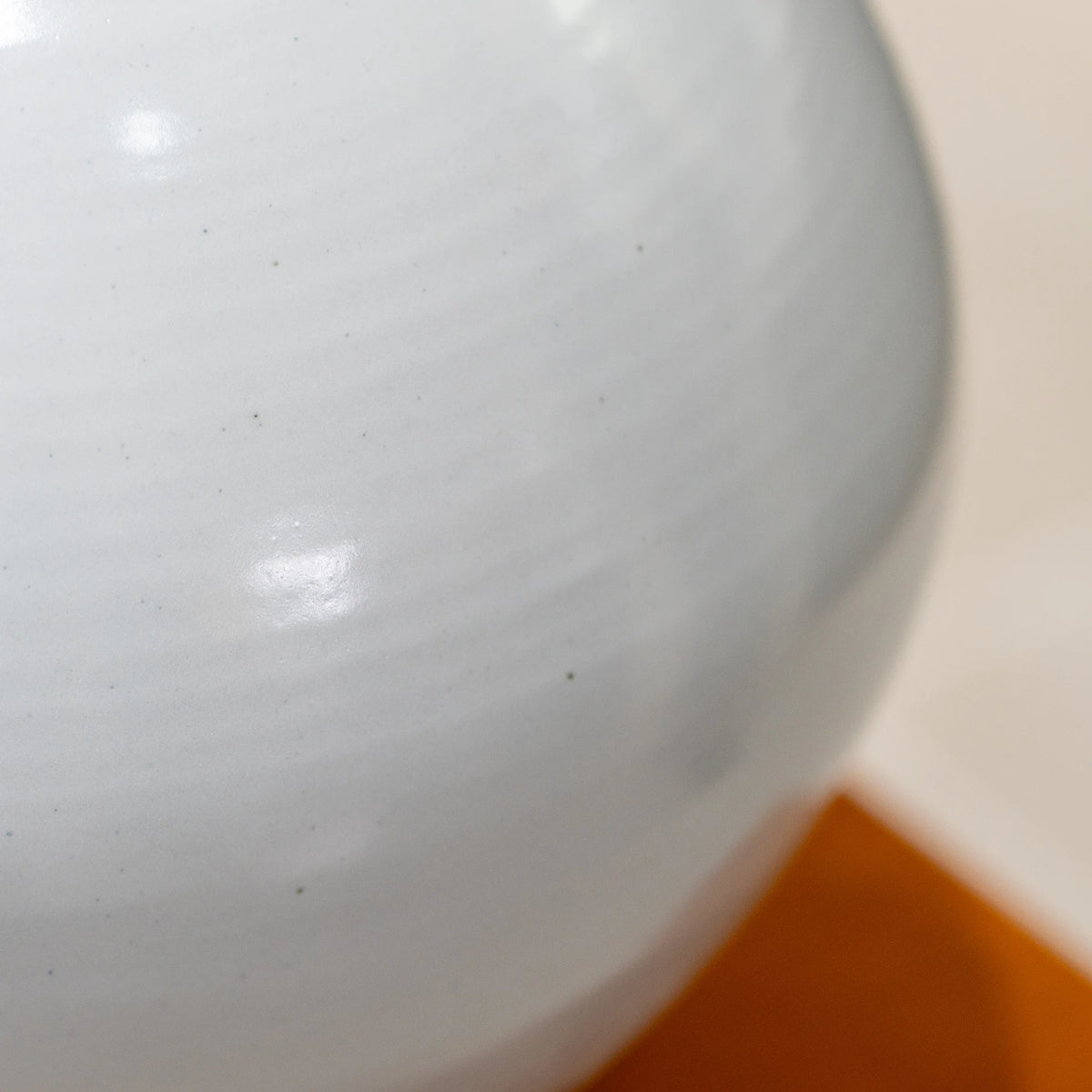
Looking closely, one finds the slow horizontal rhythm left by the Grand Master’s hands upon the wheel, and, here and there, a minute freckle left by ash and flame: the quiet signatures of a wood-fired kiln, which no modern kiln can imitate. They are not flaws; they are the record of how the jar came into being.
The beauty of a moon jar has never been the beauty of perfect symmetry. It is the beauty of generosity, of a form that seems to have settled into its own roundness, as the moon does on a clear night.
The Moon Jar on the World Stage
The worth of the moon jar is not a matter of sentiment. It has been established, again and again, in the great salerooms of New York and Seoul, where historic moon jars of the Joseon dynasty have commanded some of the highest prices ever paid for Korean art.
- US$4.56 million — Christie’s New York, March 2023. An 18th-century moon jar, sold at more than twice its high estimate: the auction record for a moon jar
- US$3.57 million — Sotheby’s New York, September 2023. A moon jar of the late 17th to early 18th century, presented in a sale devoted to this single work
- US$3.186 million — Christie’s New York, March 2026. An 18th-century moon jar, 42.5 cm, sold far above its estimate of US$1–2 million
- US$2.83 million — Christie’s New York, March 2025. An 18th-century moon jar, 45 cm, sold above its estimate
- KRW 3.1 billion — Seoul Auction, June 2019. A Joseon white porcelain moon jar, 45.5 cm
- US$1.27 million — Christie’s, 2007
These are the prices of historic jars, each some forty-five centimeters in height. They show how highly the world now esteems the form itself. Manwol is a work of our own time: sixty-one centimeters, made in the very same way, by the hand of the living master revered as Korea’s foremost in this form.
The Moon Jar: Korea’s Vessel of the Full Moon
In the late Joseon Dynasty, Korean potters created round white jars of such quiet, generous beauty that later generations named them dalhangari, “moon jars,” for their likeness to the full moon rising over the hills. Never perfectly symmetrical, softly luminous, and calm as moonlight itself, the moon jar has become the most beloved emblem of Korean beauty. Today the finest historic examples are designated National Treasures of Korea.
The moon jar is the living expression of an intangible heritage of the Republic of Korea, the art of the Sagijang, and is regarded by collectors as the very summit of Korean ceramics.
As a gift for a new home, a wedding, a family milestone, or a gesture of respect across nations, Manwol carries a wish every household understands: may this home be as full, as bright, and as untroubled as the full moon.
The Fullness of the Moon
- The full moon — in Korea, the emblem of abundance, fulfilment, and wishes granted; for centuries families have made their wishes beneath the first full moon of the year
- The white — the color of purity, integrity, and restraint, cherished by the scholars of Joseon as the mark of a clear mind
- The roundness — a form without corners: harmony within the family, and generosity toward all who enter the home
- The emptiness — a vessel that holds nothing, and therefore has room for everything; a quiet invitation to stillness
- The natural asymmetry — a beauty that does not insist upon perfection, and is the more complete for it
The Craft: Two Hemispheres Joined, Fired by Pine and Flame
- White porcelain clay (baekto) — refined white clay, prepared for a pure, luminous body
- Two hemispheres, joined as one — A jar of this size is too large to be raised in a single throw. True to the thousand-year Korean method, two great hemispheres were thrown on the wheel by the Grand Master’s own hands and joined at the waist. It is from this joining that the moon jar takes its gentle, natural asymmetry.
- Left wholly unadorned — with no painting to draw the eye, every curve and every passage of glaze stands exposed; the plain white jar is the most unforgiving test of a potter’s mastery
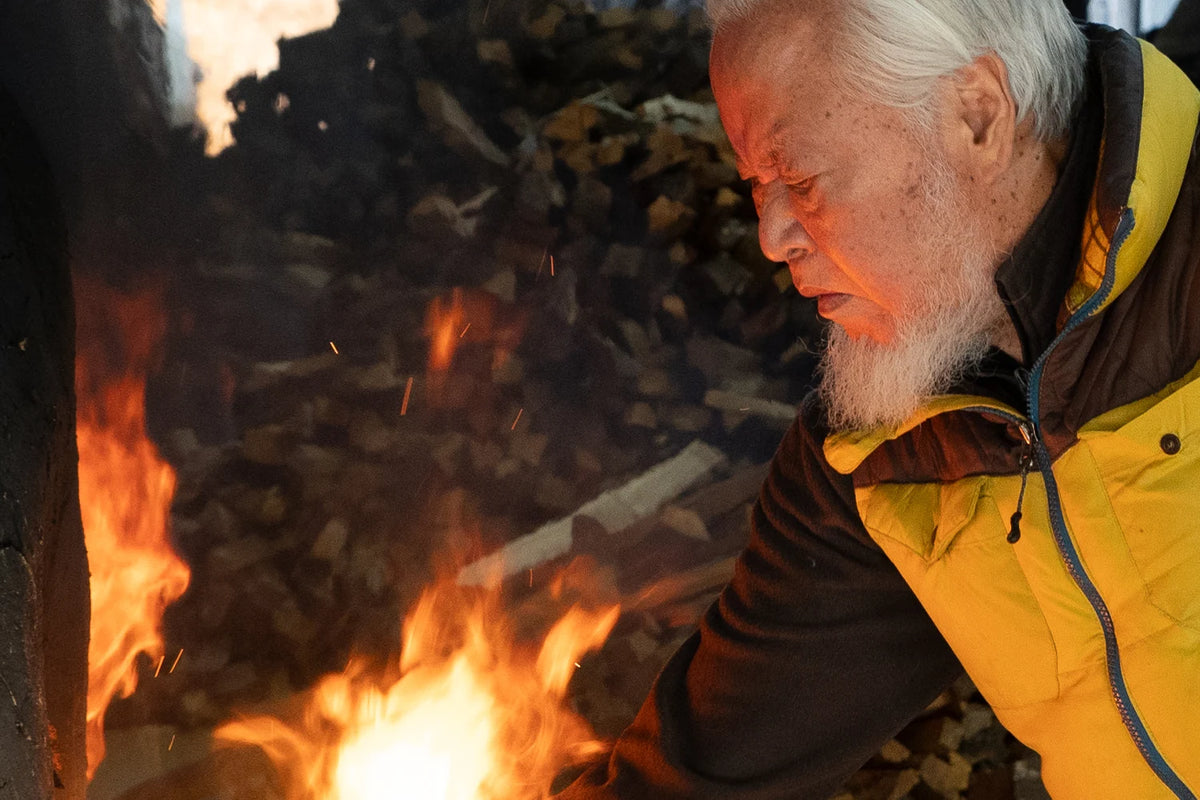
- Fired with Gangwon-do pine — The work is fired in a traditional wood-burning kiln fed with pinewood from Gangwon-do. For seventy-two hours the Grand Master and his two brothers tend the flame; the kiln is then sealed for more than a week before it is opened. The larger the vessel, the greater the risk that it will slump, crack, or warp in the fire.
- Completed by nature — In the end, the final result is decided by the flame, the wind, and the weather of the day. The living fire leaves each surface its own soft variation of tone that no modern kiln can reproduce.
- Recorded on film — The making of this work, from the clay to the opening of the kiln, has been documented on film by Signature Legacy and is preserved as part of the work’s record.
Fired at high temperature, porcelain becomes dense, durable, and resistant to time. Cared for simply, Manwol will remain as clear and bright for generations to come as on the day it left the kiln.
The Grand Master’s Porcelain
His works are exhibited in Korea’s national museums as porcelain representative of the nation, and they have represented Korea in national museums of the United Kingdom, Japan, Germany, and Russia. His porcelain is cherished for its freedom of form, and for a clear, almost childlike purity.
Specifications
- Work — Manwol (滿月) · The Full Moon
- Formal Title — White Porcelain Moon Jar (白磁大壺)
- Master — SEO KWANG SOO (徐光洙), art name Hando (韓陶)
- Honors — Holder of Gyeonggi-do Intangible Cultural Heritage No. 41 — Sagijang (designated 2005); Grand Master of Korea No. 367 — Ceramics (designated 2003)
- Dimensions — Diameter 61 × H 61 cm (approx. 24.0 × 24.0 in)
- Materials — White porcelain clay (baekto), clear glaze
- Techniques — Wheel-throwing in two hemispheres, joined at the waist; wood-firing in a traditional kiln with Gangwon-do pine
- Completed — August 2026
- Edition — Three works, each one of a kind
Accompanying Every Masterpiece
- Certificate of Authenticity — signed by the Grand Master, recording the work, materials, dimensions, year of completion, and a unique Record ID
- Provenance Record — a permanent record of the work’s origin, its confirmed author, and its identifying features
- Secure Delivery Documentation — insured, fully tracked international delivery in a custom wooden crate with triple-layered protective packaging made for grand porcelain
- Care & Conservation Guide — guidance on displaying and caring for wood-fired porcelain, so that the work may be handed down for generations
Signature Legacy presents only the works of masters officially recognized by the Republic of Korea, each verified at the master’s own atelier from the very first stage of its making.
OWN WHAT CANNOT BE RECREATED
No masterpiece by an officially designated Grand Master of Korea can be made twice. Each is shaped entirely by hand, with exacting precision, using techniques that few living artisans can still command. Its final color, though, is decided by nature. No one can foretell how the flame will travel through a traditional kiln fired with Korean pine, or what tone the glaze will take. The Master gives the work everything; the final result is decided by nature, as the fire, the wind, and the weather lead it.
So whichever work you choose, it is the only one of its kind in the world. If a completed work is available, it is dispatched immediately upon your order, fully insured. Should you wish to commission a work in the likeness of one you admire, its creation begins the day your order is confirmed. The Master will bring it as close as a hand can, and it will still be a work of its own, made once, for you. It will typically arrive within 30 days to 6 months, the exact timeline shaped by its scale, intricacy, and the Master’s own hand.
The time you spend waiting becomes part of the artistic value of a work that exists only once in the world.
The number of masters recognized by the Republic of Korea is limited, and the works each can complete in a lifetime are fewer still. As these traditions grow rarer with each passing year, every authenticated work carries a deeper cultural significance, a quieter scarcity, and a value that only grows with time.
For the collector who seeks the truly irreplaceable, this is more than an acquisition. It is the privilege of owning a one-of-a-kind Korean masterpiece, and of becoming part of its story.
AN ORIGINAL, EVERY TIME — CONFIRMED BEFORE IT IS BORN
Each Signature Legacy masterpiece is shaped entirely by hand by an officially designated Grand Master of Korea — an artist guided by decades of instinct, never by a fixed template. The spirit of the Master's hand lives in every work; yet no two compositions, and no two masterpieces, are ever exactly alike.
Before your commission begins, our Collector Concierge presents the Master's proposed design and motifs for your piece. Only after you have reviewed and approved them does the Master's hand begin its work — so that the masterpiece created for you exists, in form and in spirit, for you alone.
Masterpiece DESCRIPTION
Dimensions & Weight
Materials & Care
Our Commitment
Choose options
The Atelier · A film from the master’s workshop
Where Eternity Is Born

The Master · An Interview in His Own Words
What a Lifetime Teaches

The Proof · Opened by the Master’s Own Hand
The Moment the Kiln Opens
- Firing
- 72 hours · Gangwon pine
- Drawn from the kiln by
- Seo Kwang Soo, Grand Master of Korea No. 367
- Kept in
- The provenance dossier of this work